
In Profile: Maria Cuevas-Rodriguez
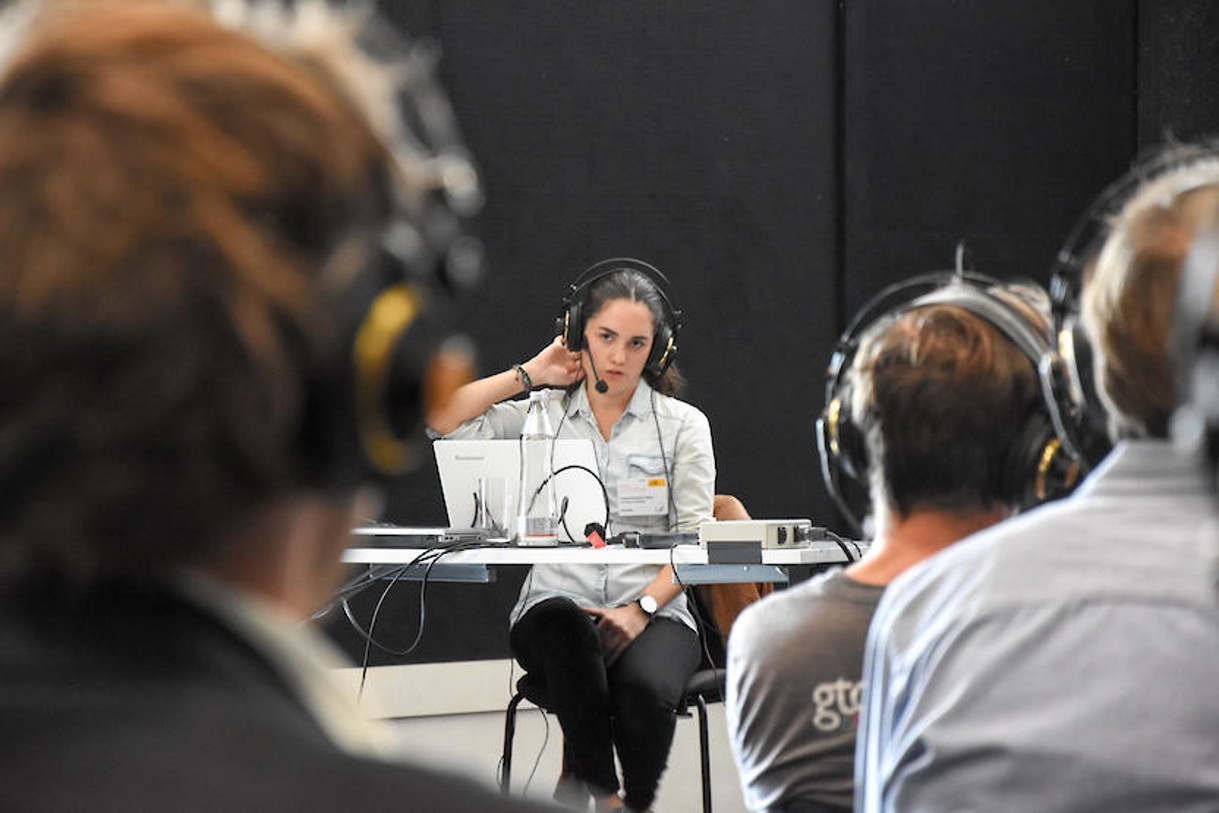
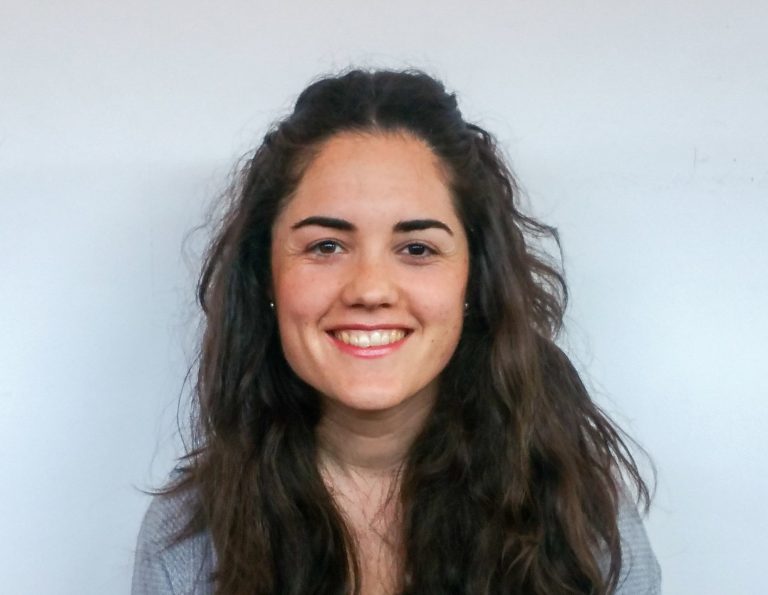
María Cuevas-Rodríguez is an Assistant Professor at the University of Malaga and part of the DIANA research group. She is also a Telecommunication Engineer (BSc+MSc). Since 2010, she has been involved in national and EU-funded projects in the fields of Robotics, Virtual Reality and 3D audio. During her PhD, she accomplished two internships, one at Imperial College London (UK) for 3 months and another at the audio team of Facebook Reality Lab (Seattle, EEUU) for 6 months.
Get in touch with Maria via her email.
Maria’s work and career
What are you working on in SONICOM: in the past, now, or soon?
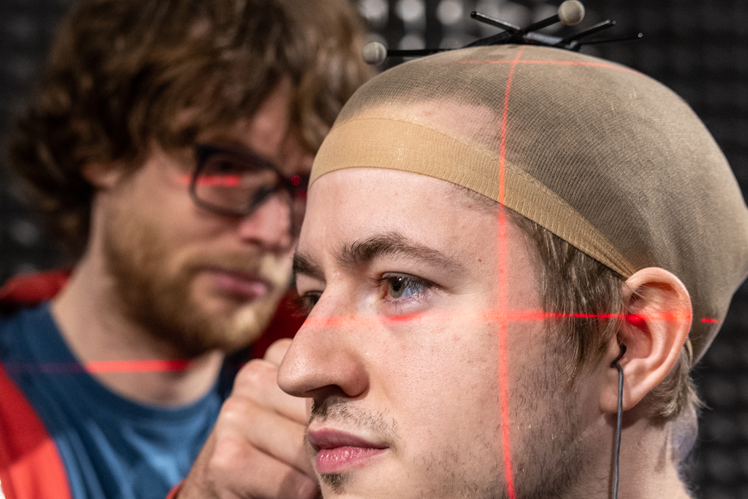
Over the past year, I worked as a developer hired by the project while carrying out postdoctoral research. I was part of the team developing the spatial audio tool within SONICOM (BRTLibrary). Currently, as a lecturer, I continue to be involved in related research activities.
Did you have a role model that influenced your career pathway
Yes, my parents have always been a fundamental source of support and a true example for me. Their work ethic, perseverance, and constant encouragement motivated me to pursue my goals with confidence and determination, even during challenging moments in my academic and professional journey.
What is your scientific background?
I have a background in Telecommunications Engineering and a Master’s degree in Mechatronics, both from the University of Málaga, where I also completed my PhD titled “3D Binaural Spatialisation for Virtual Reality and Psychoacoustics”.
How did you choose your field of study?
I was always drawn to engineering, as I’ve consistently enjoyed solving problems. Telecommunications, particularly interested me, along with programming and application development, which motivated me to pursue this field of study.
Why did you choose to become a scientist?
I chose to become a scientist because research brings together many things I enjoy: continuously learning new concepts, developing new products, and testing ideas to evaluate their feasibility and real-world potential.
What are your biggest achievements, and what are your biggest failures?
My biggest achievements include contributing to meaningful research projects, publishing scientific work, helping develop practical tools in spatial audio, and becoming a lecturer while balancing research and teaching. As for failures, I see them as learning experiences, such as rejected papers, unsuccessful experiments, or ideas that did not work as expected.
What is a typical day like for you?
A typical day at work includes checking emails, meeting with the team to review ongoing work and plan upcoming tasks, studying (there’s always something new to learn), and preparing and delivering lectures.
What are the hardest parts related to your work?
One of the hardest parts is that research doesn’t follow a fixed schedule. Balancing teaching, studying, research, project task coordination, emails, and writing publications can be challenging. I often feel I can’t dedicate as much time to each task as I would like.
Did you ever doubt your abilities as a scientist? Why? How did you handle these situations/feelings?
Yes, research often brings moments of frustration: experiments that don’t deliver the expected results, papers that are hard to write, rejections, or tough reviews. I handle these situations with patience and optimism, understanding that uncertainty is part of the process and that achieving results after setbacks is deeply rewarding.
What (or who) motivated you in difficult times?
What motivated me was reminding myself that there are harder periods and easier ones, and that sooner or later, we achieve good results. Keeping in mind that the effort will eventually pay off has always helped me stay focused and move forward.
In ten years, what do you hope to have accomplished in terms of your work?
In ten years, I hope to continue working on research projects in the same field, contributing meaningful studies to the scientific community. I also aim to be a professor who inspires students, making my classes engaging and ensuring they truly learn and grow.
During your career, have you been specifically mentored or supported by someone?
Yes, I have always worked closely with the same professor, who has been a fundamental source of support throughout my career. Thanks to his guidance, I have reached this point, and together we have achieved many meaningful and rewarding milestones.
What is the funniest or most memorable thing that has happened to you while working in science?
I wouldn’t choose just one moment. For example, preparing demos with colleagues, when something inevitably fails at the last minute, has created unforgettable memories. Conference trips and project meetings, followed by shared meals and laughter after long days with both close colleagues and those you only see at these events, are the moments that truly stay with you.
On being a woman in science
How do you feel the current environment is for women in science
I believe we are on the right path toward improving the situation. In my particular case and work environment, opportunities are equal for men and women. However, I’m aware this is not the case everywhere. Giving visibility to women in science is essential, as young girls need female role models in this field.
Where do you see women in science in 10 years’ time?
In ten years, I hope to see more women in leadership positions, leading research groups and major projects. I also expect greater representation in technical and traditionally male-dominated fields, with equality being the norm rather than the exception.
In your opinion, which changes, if any, are needed in the scientific system to engage more women in science and create more future female scientists?
In my opinion, increasing the visibility of female scientists and promoting strong mentorship programs are essential. Encouraging girls from an early age to explore science and engineering, and ensuring real work-life balance policies in academia, would help create a more inclusive environment and inspire future female scientists.
Do you have anything else that you’d like to say to young, female audiences?
If you are passionate about science, go for it. We are all capable, and with effort and dedication, you can achieve whatever you set your mind to. Believe in yourself and don’t let doubts hold you back.
Outside the lab
Do you come from an academic family?
Yes, I come from an academic family. My father studied at university and works in the healthcare field.
Besides your scientific interests, what are your personal interests?
Perhaps because I spend so much time working on a computer, in my free time I really enjoy outdoor activities. I like hiking, going to the beach, walking, exercising, and spending quality time with my family and friends.
Is it hard to manage both a career and private life? How do you manage both?
There are more challenging periods than others. In general, I believe the key is to manage time well and avoid mixing work and personal life. I dedicate certain hours of the day to work and others to my family, trying to stay fully present in each role.
If you had the option to give advice to a younger version of yourself, what would that be?
It’s actually advice I once received, and that truly worked for me: dedicate yourself to what you are genuinely passionate about. Your job takes up a significant part of your daily life, so try to choose something you truly enjoy and feel motivated to pursue.