
Funding the Future: SONICOM’s Grant Writing Workshop for Early Career Researchers
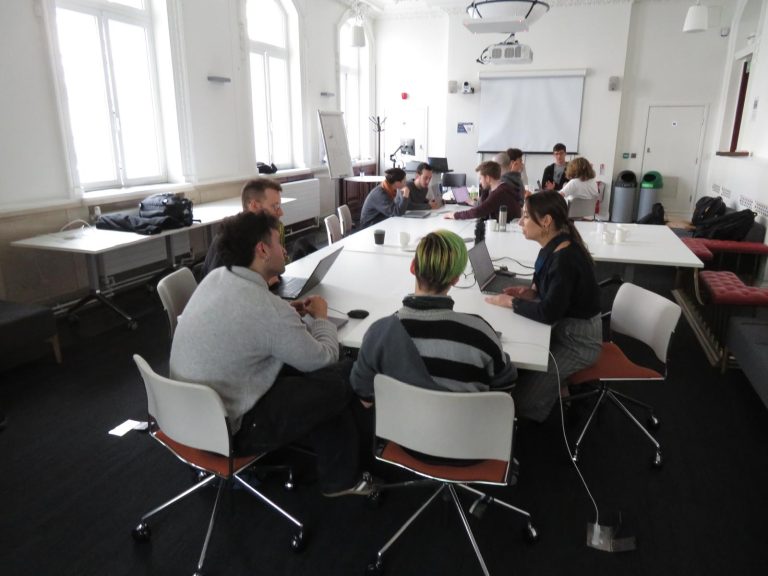
On the 20th of May 2026, the SONICOM project coordinated a dedicated workshop for Early Career Researchers (ECRs), designed to deepen their understanding of what is required when writing a grant application and how the process of securing funding works across the UK and Europe. The workshop brought together 14 participants from 7 institutions, providing a great opportunity for networking and collaboration.
Researchers began arriving from 9:30am, and the day opened with a welcome from Professor Lorenzo Picinali, Principal Investigator (PI) of SONICOM. He began by expressing his motivation behind organising the workshop: ‘It was easier for me to compete and find funding 20 years ago; today, not so much. So, I want to do something to help you, the newer generation coming through, to thrive in this more intense, competitive funding landscape. Hence why we are here together.’
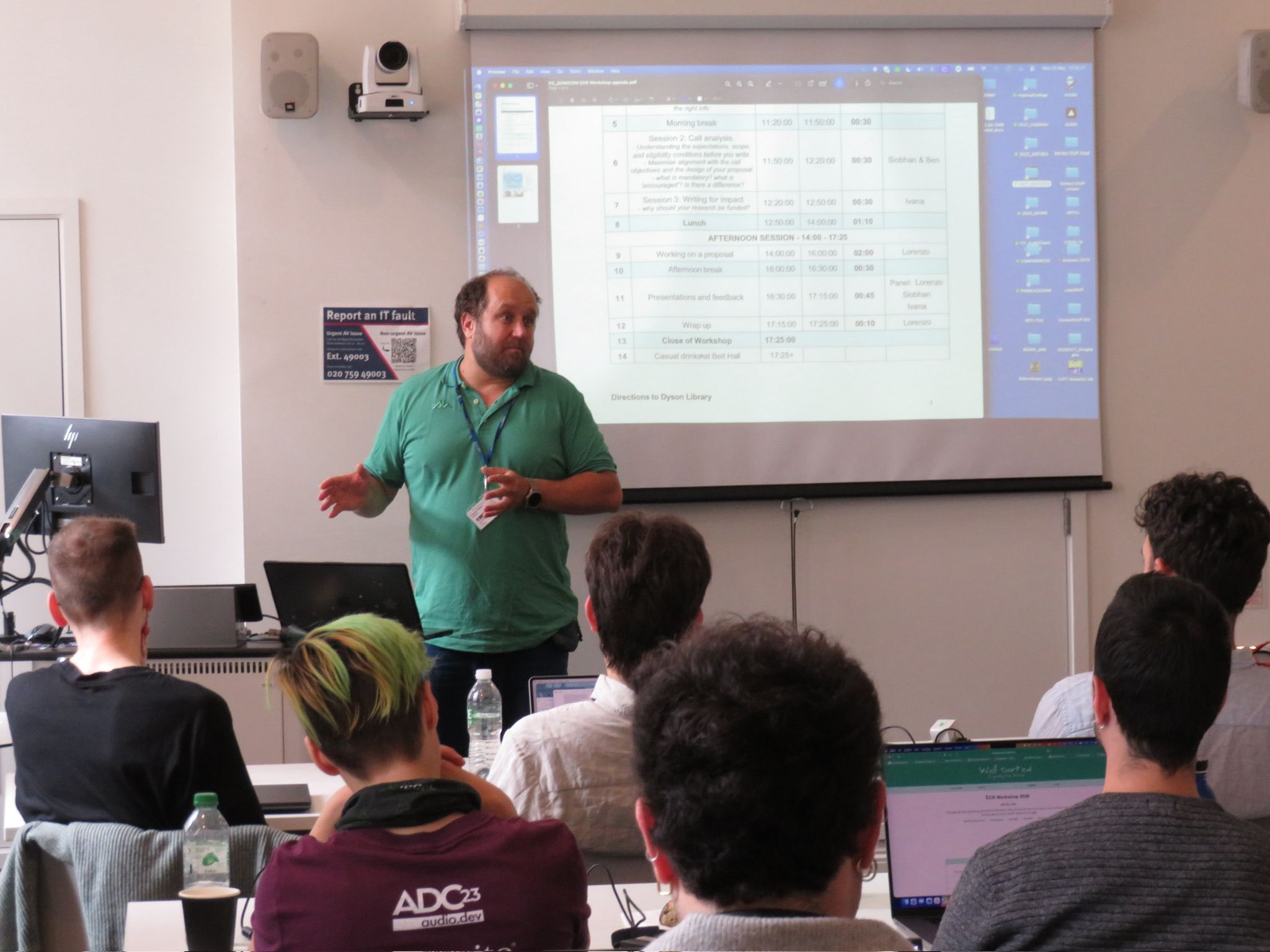
Prof Lorenzo Picinali, PI of SONICOM, welcoming ECRs to the workshop
Prof. Picinali continued by providing an overview of his career trajectory, deliberately highlighting both failures and successes, reminding participants that this up-and-down cycle is normal in any researcher’s career.
Following on, Branwen Hide, Research Development Manager at Imperial College London, who is the primary advisor for Imperial’s academic research community interested in collaborative funding opportunities with the European Commission, gave an overview of how European funding works. Branwen spoke through key funding opportunities in the European Commission’s Horizon Europe scheme, places to connect, and where to get the right information from.
The session prompted a highly engaged response from the researchers, with questions and discussion flowing freely. So much so that the day was already running behind schedule, which resulted in a swift break for coffee and pastries before the group reconvened to continue asking questions.
Next, Siobhan Markus, Head of Impact Management with the Research Impact Management Office at Imperial College London and Project Manager of SONICOM, guided participants through the critical groundwork required before starting to write a proposal. Siobhan covered understanding the expectations, scope, and eligibility of a funding call; how to maximise alignment with the call, objectives and the design of your proposal; and navigating the distinction between what is mandatory and what is encouraged.
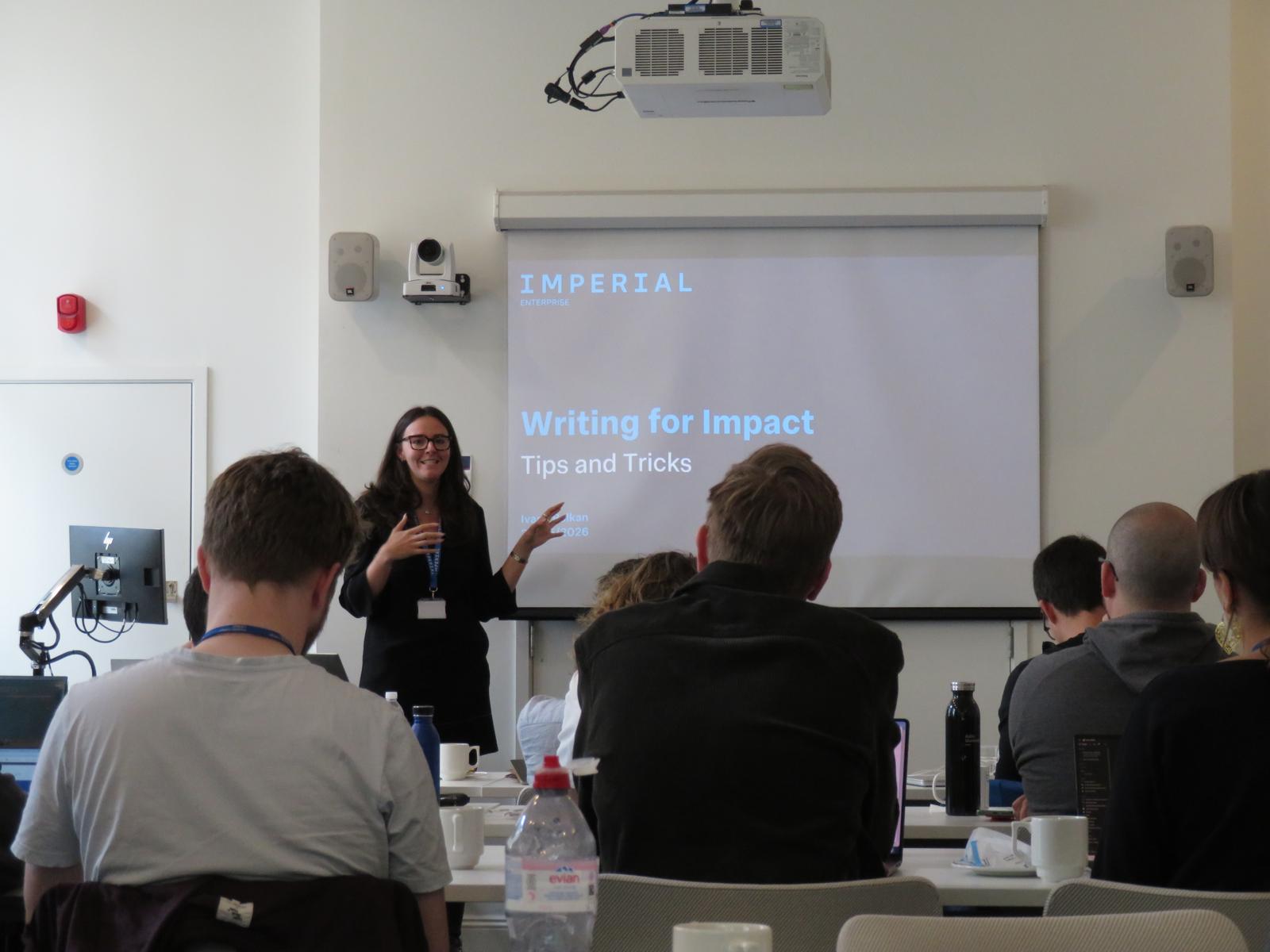
Ivana Balkan, Innovation Manager also within the Research Impact Management Office, built on Siobhan’s presentation by focusing again on what to include in a proposal, this time honing in on writing for impact. The session explored how to construct a clear and persuasive case for why research deserves funding, framing research in terms of broader societal, economic, and scientific impact, and common pitfalls in writing for impact and how to avoid them.
 A well-earned lunch break allowed participants to decompress, reconnect with familiar colleagues, and forge new connections.
The afternoon shifted from theory to practice, with participants being tasked to work in groups to craft an idea for a proposal and to try to find a call that aligned with their idea. Each group had to consider an original research idea suitable for a grant proposal, identify a relevant funding call that aligned with their concept, and craft the early foundations of a proposal, applying the morning’s learning in real time. Following a refreshment break, the workshop reconvened for its final session: the group presentations.
Each team presented their proposed research idea and identified a funding call to the room, before receiving feedback from Prof Picinali, Siobhan and Ivana from the morning’s session, and Communications Manager for SONICOM, Alexandra Rayner. The four offered constructive, personalised feedback on each proposal, drawing on the themes explored throughout the day, from alignment with funding calls and eligibility considerations to impact framing and narrative clarity.
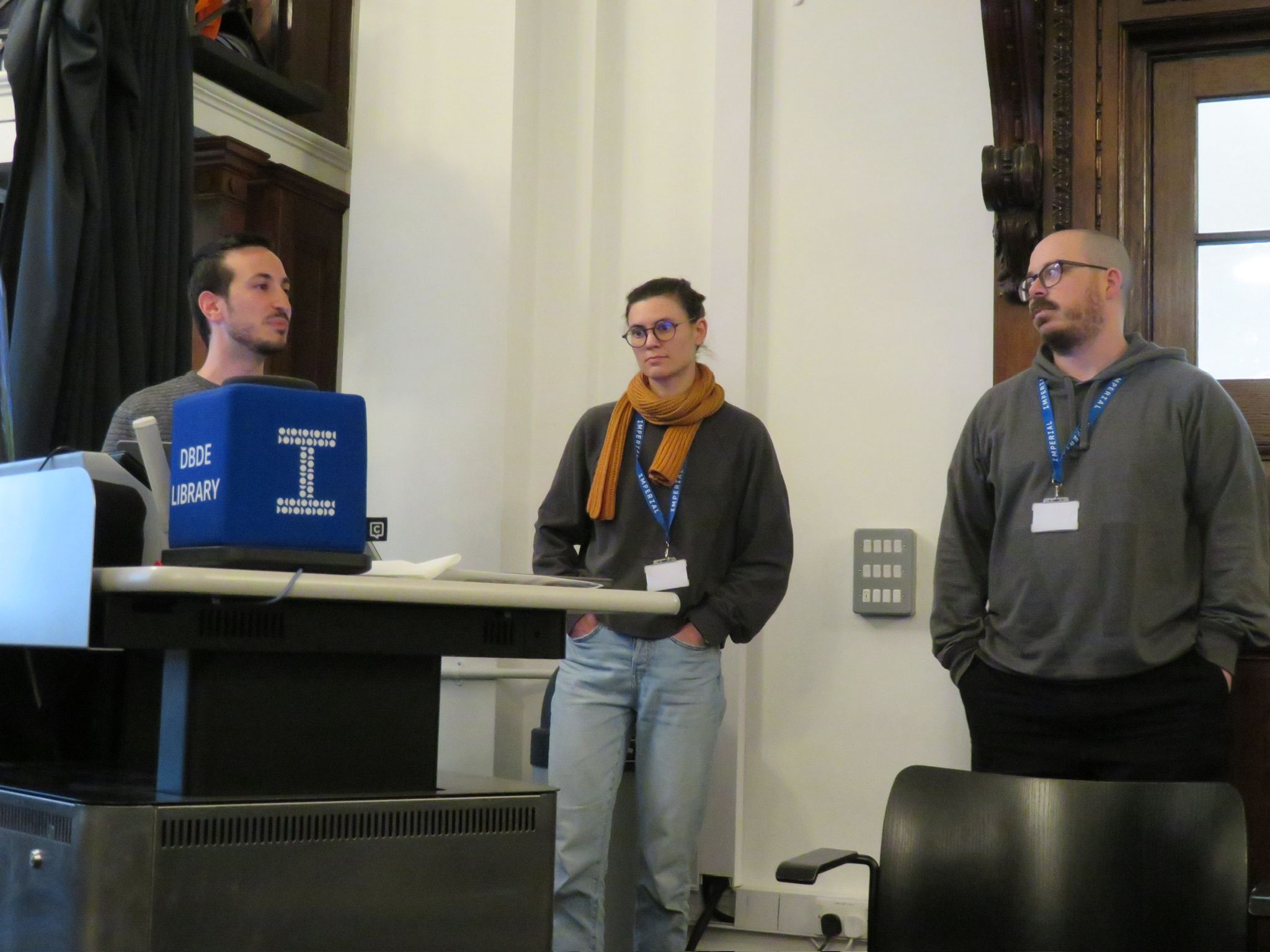
A team of ECRs presenting their proposal for a funding call
Prof Picinali brought the day to a close, reflecting on the day’s discussions and encouraging participants to carry the lessons learned into their own funding journeys. The wrap-up reinforced the workshop’s central message, that navigating the funding landscape is a skill that can be learned, and that building the right networks, asking questions, and writing with clarity and purpose are all within reach for the next generation of researchers.
One ECR, Dr Rapolas Daugintis, reflected on his key takeaway of the workshop: ‘Research funding is extremely competitive and requires a lot of perseverance. However, one can improve their chances by understanding the rules of the bidding game.’
SONICOM’s Project Manager (and co-organiser of the ECR workshop) reflected on the day:
“Workshops like this one are crucially important for any researcher. Whether they be starting out in their career or are well-seasoned, no funding scheme should be considered as stagnant. It fluctuates with the moving tides of a multitude of variables from international policy and government elections to local funding possibilities and institutional priorities.
Really understanding the landscape in which you are applying for funding, must be navigated with a critical eye and with creative ambition; it is an art form. This wonderful lot of passionate researchers are early in their careers, so it was wonderful to impart some of my knowledge and navigational tools so that they can not only catapult their career prospects, employability, and upscale their research value, but also turn their science into art.”
The day concluded on a social note, with participants and speakers gathering for casual drinks at Beit Hall, providing a relaxed and informal setting to continue conversations sparked throughout a very successful day.
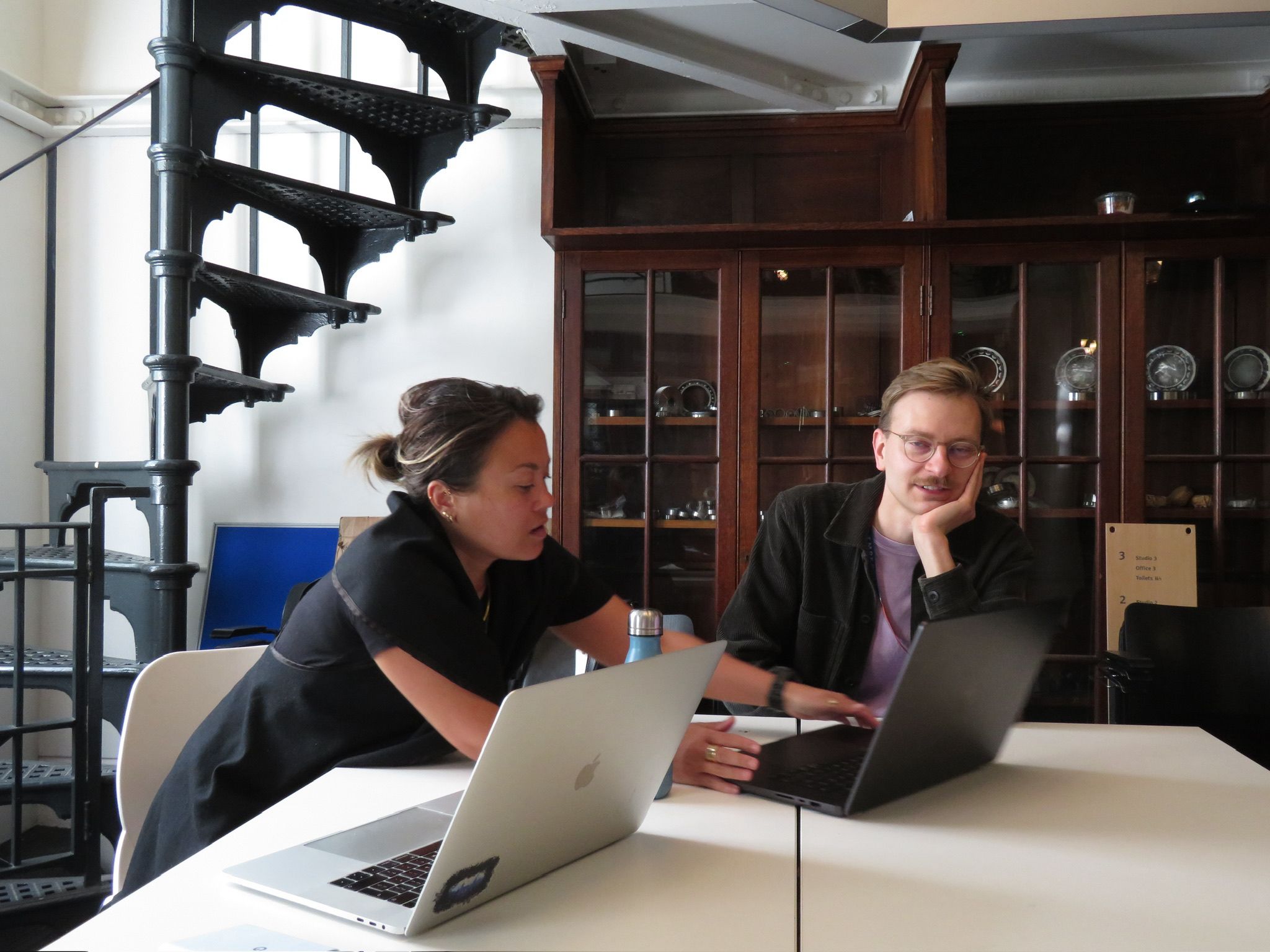
Siobhan Markus, Head of Impact Management in the Research Impact Management Office and Dr Rapolas Daugintis, University of Surrey, during the workshop